Anonymous contributed:
This article below from the ABQ Journal that came out today by John Fleck is a "must read":
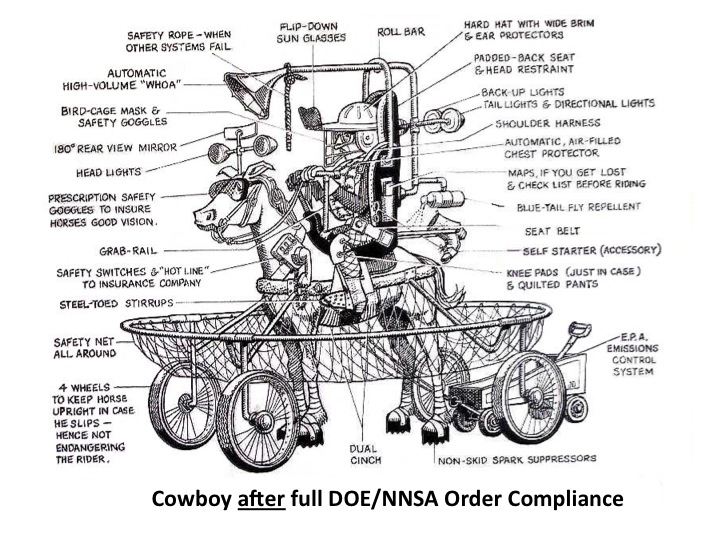
*** Bureaucracy Strangles National Laboratories ***
By John Fleck / Journal Staff Writer on Tue, Feb 28, 2012
www.abqjournal.com/main/2012/02/28/news/
bureaucracy-strangles-national-laboratories-2.html
Tuesday, February 28, 2012

Saturday, February 25, 2012
Congressional Testimony Reinforces Picture Of Damage To Labs from Federal Micromanagement
Anonymously contributed:
Congressional Testimony Reinforces Picture Of Damage To Labs from Federal Micromanagement
From the Independent 2/24/2012:
Too big to post all here, see complete at:
http://www.independentnews.com/news/article_897bb9ce-5e59-11e1-bf9f-0019bb2963f4.html
posted: Friday, February 24, 2012 12:00 am | Updated: 12:05 pm, Thu Feb 23, 2012.
By Jeff Garberson
Critical Congressional testimony last week strongly reinforced concerns expressed only two days earlier in a national report about the damage that federal micromanagement is inflicting on the nation’s three national security laboratories, including Lawrence Livermore.
The testimony was delivered to a subcommittee of the House Armed Services Committee by several former laboratory directors, including Livermore’s George Miller and Michael Anastasio.
Congressional Testimony Reinforces Picture Of Damage To Labs from Federal Micromanagement
From the Independent 2/24/2012:
Too big to post all here, see complete at:
http://www.independentnews.com/news/article_897bb9ce-5e59-11e1-bf9f-0019bb2963f4.html
posted: Friday, February 24, 2012 12:00 am | Updated: 12:05 pm, Thu Feb 23, 2012.
By Jeff Garberson
Critical Congressional testimony last week strongly reinforced concerns expressed only two days earlier in a national report about the damage that federal micromanagement is inflicting on the nation’s three national security laboratories, including Lawrence Livermore.
The testimony was delivered to a subcommittee of the House Armed Services Committee by several former laboratory directors, including Livermore’s George Miller and Michael Anastasio.
Wednesday, February 22, 2012
A message from the LLNL director on LANL workforce plan
A message from the LLNL director on LANL workforce plan
You may have seen that Los Alamos National Laboratory has announced it is working with NNSA to develop a workforce plan to help mitigate the impact of budget shortfalls at LANL for fiscal year 2012.
Our Laboratory remains on a sound footing for FY12. As you know, there is still a great deal of uncertainty in Washington over final appropriations for FY13 and beyond, and LLNL senior leaders continue to work the situation very closely. The Laboratory can remain on a sound footing if final appropriations for FY13 are consistent with FY12.
LLNL senior management is working proactively to maintain stability throughout the expected federal budget turmoil, to include a possible yearlong Continuing Resolution at the end of FY12, while keeping the entire institution fiscally sound and meeting the demands of our many missions.
Parney Albright
You may have seen that Los Alamos National Laboratory has announced it is working with NNSA to develop a workforce plan to help mitigate the impact of budget shortfalls at LANL for fiscal year 2012.
Our Laboratory remains on a sound footing for FY12. As you know, there is still a great deal of uncertainty in Washington over final appropriations for FY13 and beyond, and LLNL senior leaders continue to work the situation very closely. The Laboratory can remain on a sound footing if final appropriations for FY13 are consistent with FY12.
LLNL senior management is working proactively to maintain stability throughout the expected federal budget turmoil, to include a possible yearlong Continuing Resolution at the end of FY12, while keeping the entire institution fiscally sound and meeting the demands of our many missions.
Parney Albright
Budget Forced Delay of Los Alamos Plutonium Lab
Anonymously contributed:
From Global Security Newswire
Feb. 21, 2012
Budget Forced Delay of Los Alamos Plutonium Lab: DOE Secretary
Spending restrictions forced the Obama administration to slash funding for a plutonium facility at the Los Alamos National Laboratory in New Mexico, Energy Secretary Steven Chu said on Thursday (see GSN, Feb. 14).
The Energy Department's semi-autonomous National Nuclear Security Administration plans a five-year delay in construction of the Chemistry and Metallurgy Research Replacement site, which would supplant a decades-old facility that provides analytical chemistry and other research services for production of plutonium nuclear-weapon cores at Los Alamos. The replacement plant is now estimated to cost up to $6 billion.
"Because of the budget constraints ... we have to look at all the other projects and we felt we could not simply start CMRR and the Uranium Processing Facility at Oak Ridge," the Albuquerque Journal quoted Chu as saying during a Senate committee hearing. "We felt there was more compelling reason to begin with that" UPF site at the Y-12 National Security Complex in Tennessee.
A senior NNSA official last week said the deterioration of an existing Y-12 facility for processing weapon-grade uranium demanded that the Uranium Processing Facility take precedence. The administration is seeking $340 million for the project in the budget year that begins on Oct. 1.
Some observers have said the budget decision spells the end for the Los Alamos plutonium facility. Chu, though, said his department intends to move ahead with design of the site to 90 percent.
"That's very prudent because for a number of reasons, before you start construction it is best to have most of it designed," he told the Senate Energy and Natural Resources Committee.
Committee Chairman Jeff Bingaman (D-N.M.) said Chu skirted his questions about the plutonium project but that he would continue to pursue the matter.
"The truth is we don't know at this point whether there is a case to be made that they are making a mistake here," the lawmaker said. "Clearly, the projected cost of this facility has grown enormously, and I'm sure that's one reason they've decided not to go forward with it as this point."
From Global Security Newswire
Feb. 21, 2012
Budget Forced Delay of Los Alamos Plutonium Lab: DOE Secretary
Spending restrictions forced the Obama administration to slash funding for a plutonium facility at the Los Alamos National Laboratory in New Mexico, Energy Secretary Steven Chu said on Thursday (see GSN, Feb. 14).
The Energy Department's semi-autonomous National Nuclear Security Administration plans a five-year delay in construction of the Chemistry and Metallurgy Research Replacement site, which would supplant a decades-old facility that provides analytical chemistry and other research services for production of plutonium nuclear-weapon cores at Los Alamos. The replacement plant is now estimated to cost up to $6 billion.
"Because of the budget constraints ... we have to look at all the other projects and we felt we could not simply start CMRR and the Uranium Processing Facility at Oak Ridge," the Albuquerque Journal quoted Chu as saying during a Senate committee hearing. "We felt there was more compelling reason to begin with that" UPF site at the Y-12 National Security Complex in Tennessee.
A senior NNSA official last week said the deterioration of an existing Y-12 facility for processing weapon-grade uranium demanded that the Uranium Processing Facility take precedence. The administration is seeking $340 million for the project in the budget year that begins on Oct. 1.
Some observers have said the budget decision spells the end for the Los Alamos plutonium facility. Chu, though, said his department intends to move ahead with design of the site to 90 percent.
"That's very prudent because for a number of reasons, before you start construction it is best to have most of it designed," he told the Senate Energy and Natural Resources Committee.
Committee Chairman Jeff Bingaman (D-N.M.) said Chu skirted his questions about the plutonium project but that he would continue to pursue the matter.
"The truth is we don't know at this point whether there is a case to be made that they are making a mistake here," the lawmaker said. "Clearly, the projected cost of this facility has grown enormously, and I'm sure that's one reason they've decided not to go forward with it as this point."
LANL Downsizing begins
Anonymously contributed:
From: Charles F. McMillan
Date: February 21, 2012
Subject: Cost Management and Workforce Planning
On Thursday, the Laboratory submitted a plan to NNSA calling for a
voluntary separation program (VSP) with a severance package based
on years of service. There are three main reasons why we are
taking this action now:
* Our current budget and future financial outlook require
significant cost-cutting to position the Lab for FY13 and
beyond. In FY12 alone, we face a budget reduction of around
$300 million across multiple programs.
* By implementing a voluntary separation plan, we mitigate the
possibility of an involuntary separation program later; and
* We are positioning the Laboratory to meet future mission
needs with a smaller workforce. For a variety of reasons,
attrition has been low for the last three years, so we
cannot rely on attrition alone to achieve workforce
reductions.
When I established the Laboratory Integrated Stewardship Council
(LISC) in November, I knew it was necessary to take immediate
measures in anticipation of significant budget uncertainties.
The LISC has managed decisions on hiring actions and large
procurements to ensure that we proceed only with actions that are
reasonable and necessary. Additionally, the principal associate
directors have championed initiatives to reduce costs related to
travel, materials, and services. We also have invited employees to
submit their own ideas for cost-cutting, and have established a
committee to review every idea and to present recommendations to
the LISC.
While I am pleased with the progress and the savings from these
actions, the Lab needs to take additional steps for FY13 and
beyond. With labor comprising 63 percent of the budget, a smaller
workforce is part of the solution.
I have asked the LISC to monitor and recommend appropriate action
with respect to reducing costs associated with our flexible
workforce. In that vein, the LISC has already capped student
hiring at 2011 levels. Craft employment has always fluctuated
based on available work and will continue to do so. Analysis
continues of the term and staff augmentation workforce.
With respect to the regular workforce, the VSP we submitted
proposes a regular workforce reduction of 400 to 800 employees to
align our funding with our missions.
One of our top priorities as we go through this process will be to
ensure we meet mission deliverables this year and going forward.
Similar to the voluntary program in 2008, critical skilled
positions will be excluded from eligibility. In addition, we will
decide whether to decline individual applications based on the
need to retain a sufficient number of employees with certain
essential skills. Though we also retained that discretion in 2008,
we did not exercise it. Unlike the program in that year, we expect
to deny some applications in this VSP.
We anticipate the VSP will be completed in a matter of weeks
rather than months. Knowing that many of you face a difficult
personal decision, I encourage you to begin thinking about the
program now. We will provide details of the plan to you
immediately after NNSA approval. Human Resources will be prepared
to respond to your benefits questions and will schedule
information programs.
We are committed to treating all employees fairly and respectfully
in this process. We did so during the voluntary program in 2008
and we will do so again. I will maintain open and effective
communication with you and other stakeholders of the Laboratory.
This includes all-employee meetings such as the one scheduled
today. Please remember that we are still in a planning phase, and
there are many questions to which we do not yet have answers. We
will have more details as soon as NNSA approves the plan.
From: Charles F. McMillan
Date: February 21, 2012
Subject: Cost Management and Workforce Planning
On Thursday, the Laboratory submitted a plan to NNSA calling for a
voluntary separation program (VSP) with a severance package based
on years of service. There are three main reasons why we are
taking this action now:
* Our current budget and future financial outlook require
significant cost-cutting to position the Lab for FY13 and
beyond. In FY12 alone, we face a budget reduction of around
$300 million across multiple programs.
* By implementing a voluntary separation plan, we mitigate the
possibility of an involuntary separation program later; and
* We are positioning the Laboratory to meet future mission
needs with a smaller workforce. For a variety of reasons,
attrition has been low for the last three years, so we
cannot rely on attrition alone to achieve workforce
reductions.
When I established the Laboratory Integrated Stewardship Council
(LISC) in November, I knew it was necessary to take immediate
measures in anticipation of significant budget uncertainties.
The LISC has managed decisions on hiring actions and large
procurements to ensure that we proceed only with actions that are
reasonable and necessary. Additionally, the principal associate
directors have championed initiatives to reduce costs related to
travel, materials, and services. We also have invited employees to
submit their own ideas for cost-cutting, and have established a
committee to review every idea and to present recommendations to
the LISC.
While I am pleased with the progress and the savings from these
actions, the Lab needs to take additional steps for FY13 and
beyond. With labor comprising 63 percent of the budget, a smaller
workforce is part of the solution.
I have asked the LISC to monitor and recommend appropriate action
with respect to reducing costs associated with our flexible
workforce. In that vein, the LISC has already capped student
hiring at 2011 levels. Craft employment has always fluctuated
based on available work and will continue to do so. Analysis
continues of the term and staff augmentation workforce.
With respect to the regular workforce, the VSP we submitted
proposes a regular workforce reduction of 400 to 800 employees to
align our funding with our missions.
One of our top priorities as we go through this process will be to
ensure we meet mission deliverables this year and going forward.
Similar to the voluntary program in 2008, critical skilled
positions will be excluded from eligibility. In addition, we will
decide whether to decline individual applications based on the
need to retain a sufficient number of employees with certain
essential skills. Though we also retained that discretion in 2008,
we did not exercise it. Unlike the program in that year, we expect
to deny some applications in this VSP.
We anticipate the VSP will be completed in a matter of weeks
rather than months. Knowing that many of you face a difficult
personal decision, I encourage you to begin thinking about the
program now. We will provide details of the plan to you
immediately after NNSA approval. Human Resources will be prepared
to respond to your benefits questions and will schedule
information programs.
We are committed to treating all employees fairly and respectfully
in this process. We did so during the voluntary program in 2008
and we will do so again. I will maintain open and effective
communication with you and other stakeholders of the Laboratory.
This includes all-employee meetings such as the one scheduled
today. Please remember that we are still in a planning phase, and
there are many questions to which we do not yet have answers. We
will have more details as soon as NNSA approves the plan.
Monday, February 20, 2012
Subscribe to:
Posts (Atom)